This article contains information about:
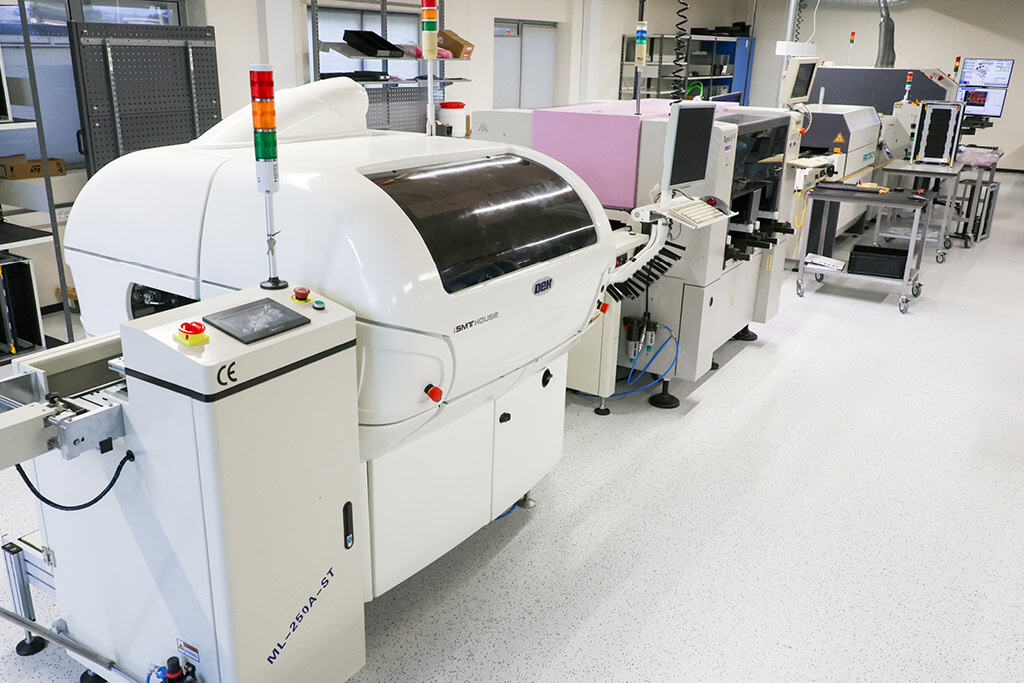
- Solder stencil printer
- Pick and place machine
- Manual check and component addition
- Reflow owen process
- Buffer machine
- Manual through-hole component placement
- Selective soldering machine
Responsible for the PCB assembly line
Jøran Lygren oversees the PCB assembly line at Ixys. He started as an apprentice in 2021 and has worked as a technician at Ixys since 2023.
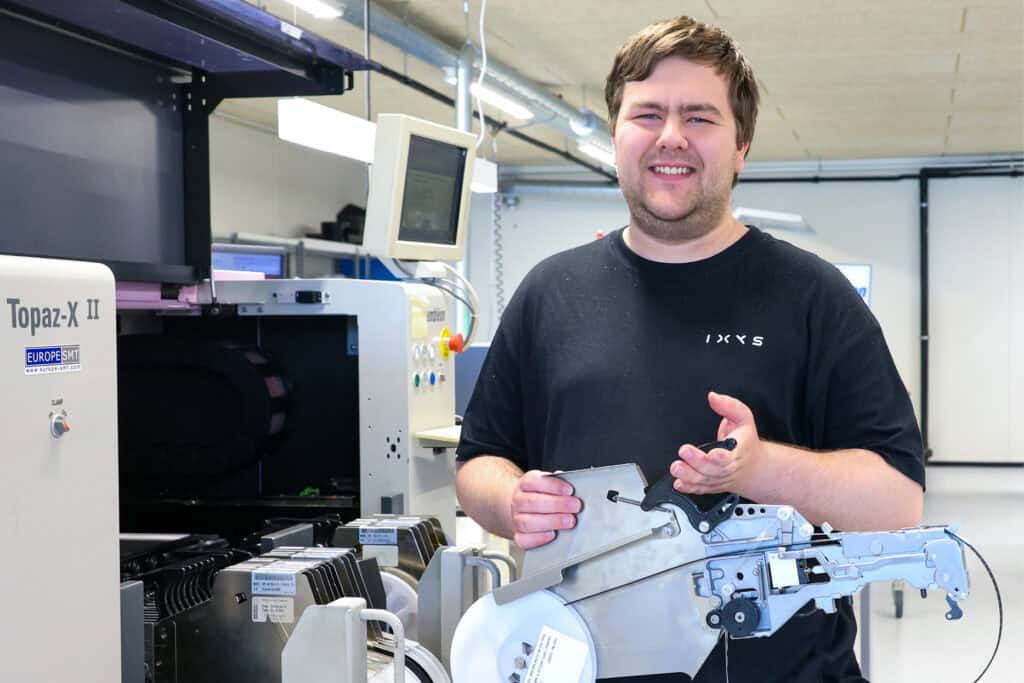
Previously, the stencil and pick-and-place machines were not aligned, requiring more manual work. The assembly line has since expanded with the addition of buffer and selective soldering machines in recent years.
“If we were to upgrade something in the PCB assembly line, it would be a new pick-and-place machine,” says Jøran.
Solder stencil printer
The first step in making PCB assemblies is applying precise amounts of solder paste to the electronic board before component placement. The printer uses cameras to locate fiducial marks on the PCB, comparing them with matching features on the stencil. This ensures the stencil openings align accurately with the PCB pads.
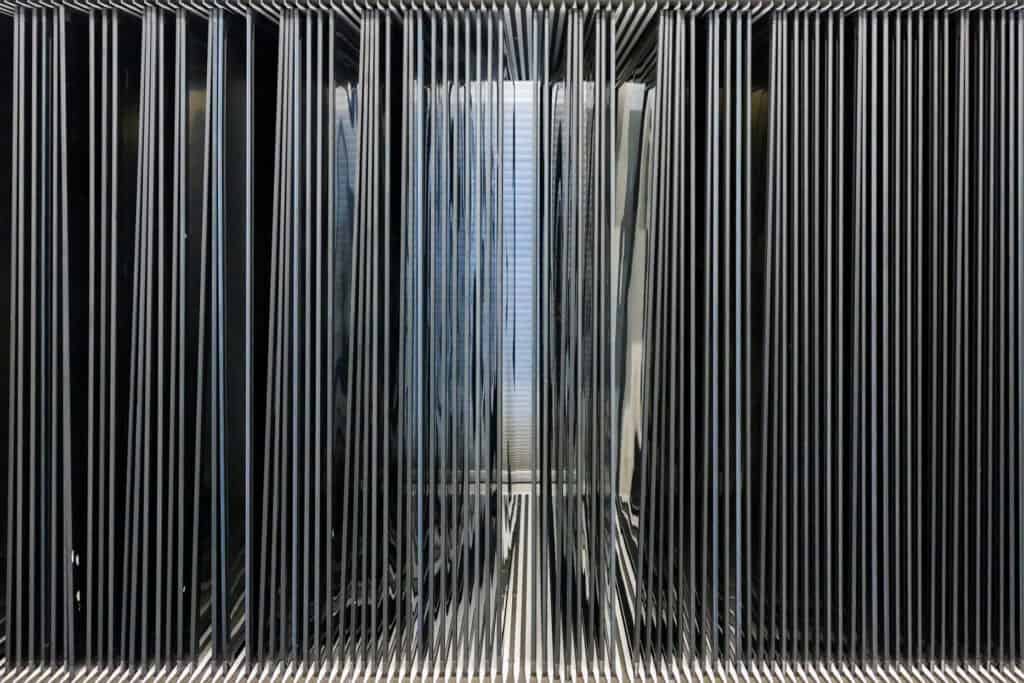
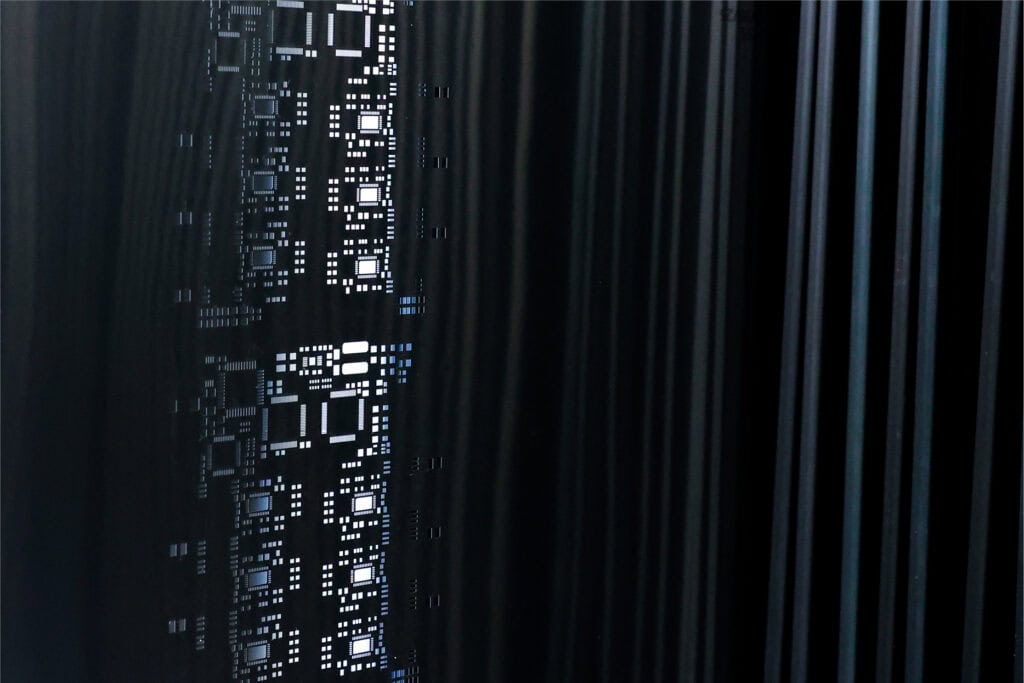
A thin stainless stencil, with laser-cut apetures corresponding to the solder pads, applies the solder paste to attach surface-mounted components. The paste consists of small microscopic solder balls in a flux, which is very viscous. The printed PCB is then transferred to the pick-and-place machine.
Pick-and-place machine
This machine is a key piece of equipment in surface-mount technology (SMT) manufacturing. It automatically picks electronic components from feeders and place them accurately onto the solder paste deposited on the PCB.
After solder paste application, the PCB is transferred by conveyor into the pick-and-place machine. The board is positioned and secured to remain stationary during component placement.
Using vision cameras, the machine locates fiducial marks on the PCB. These reference points allow the system to compensate for slight variations in board position, ensuring high precision component placement.
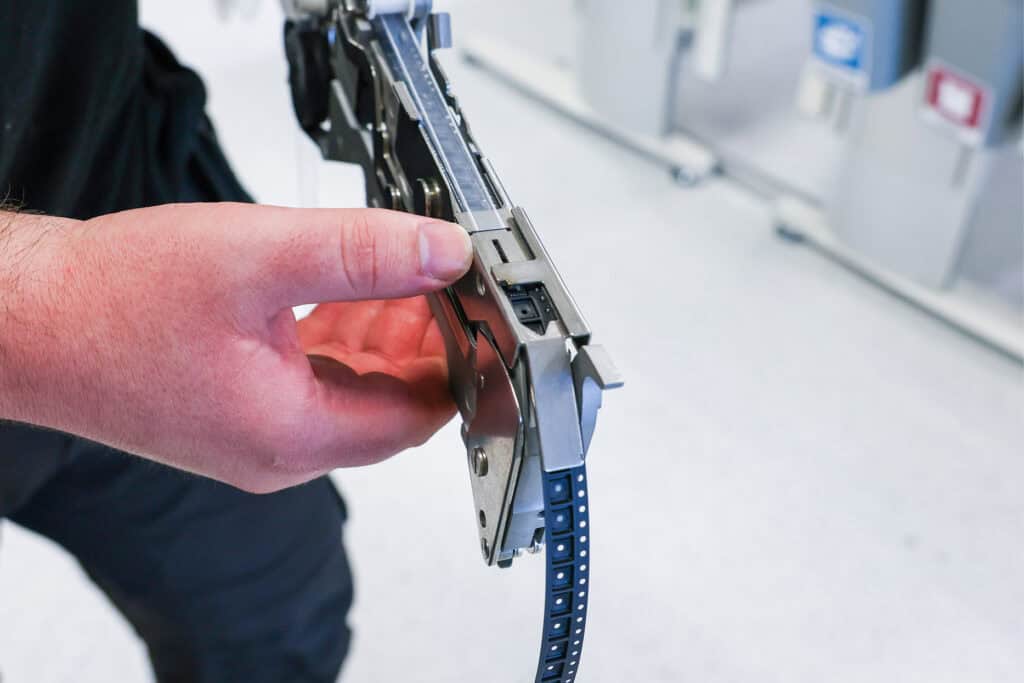
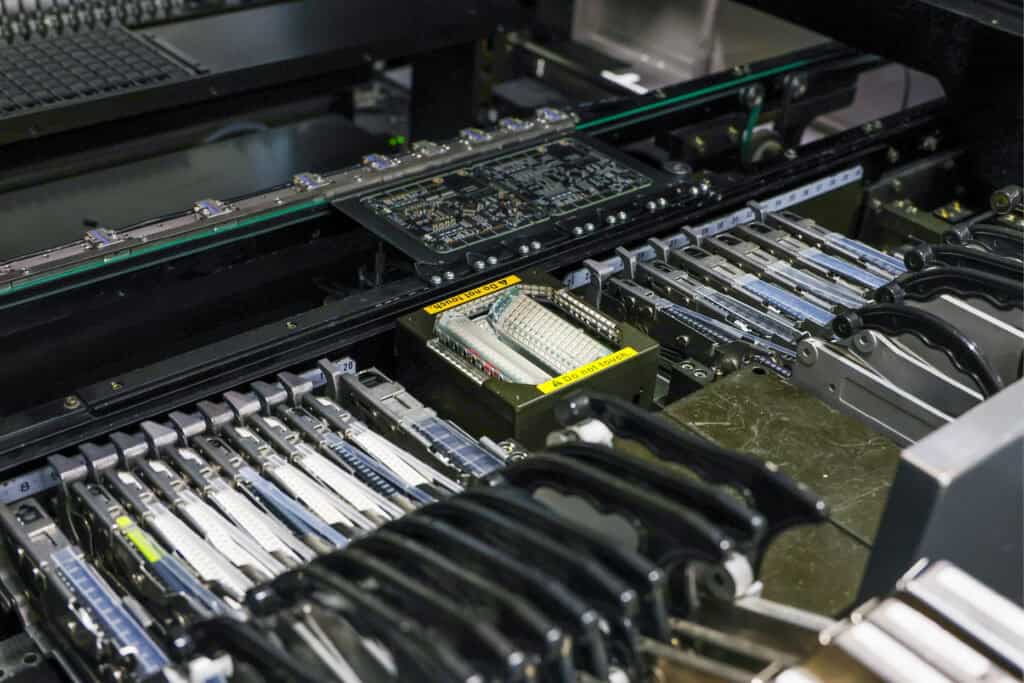
Electronic components are loaded into feeders, and the production program instructs the machine on:
- Which component to pick
- Which feeder it is located in
- Where it should be placed on the PCB
- The required orientation and rotation
A placement head, equipped with one of multiple different sizes of vacuum nozzles, moves to the correct feeder. The nozzle uses vacuum suction to pick up the component. Eight placement heads allows multiple components to be picked simultaneously, increasing production speed. The feeders vary in with, and using the smallest feeders, the machine can hold 90 different components.
With the correct nozzles, speed, and settings, the machine places components onto the solder paste with high accuracy. The tackiness of the solder paste temporarily holds the components in place until soldering.
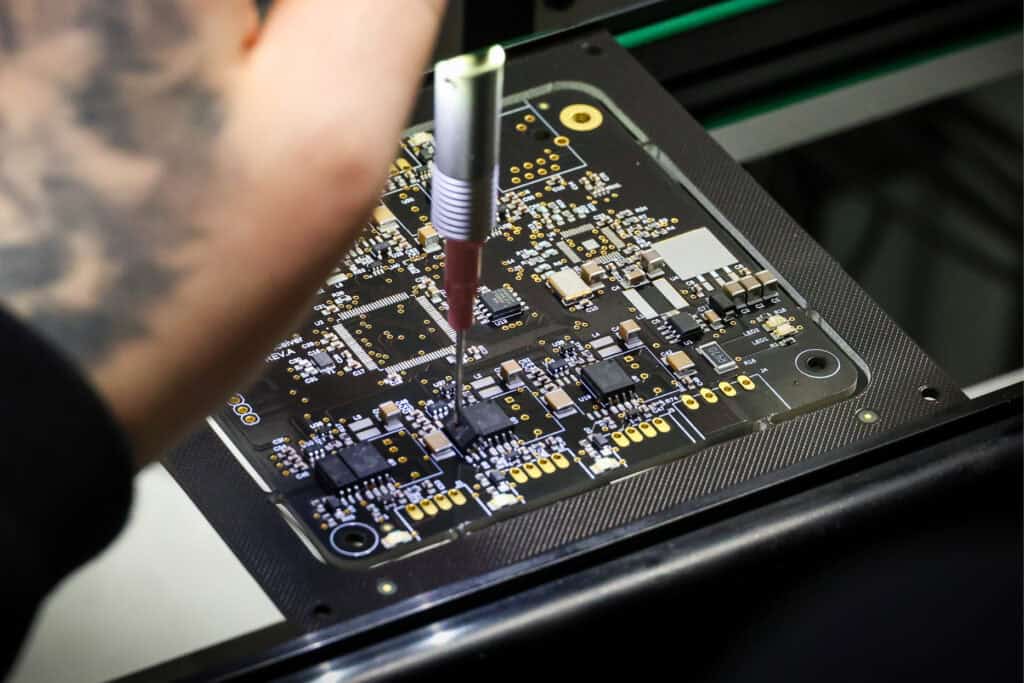
Manual check and component addition
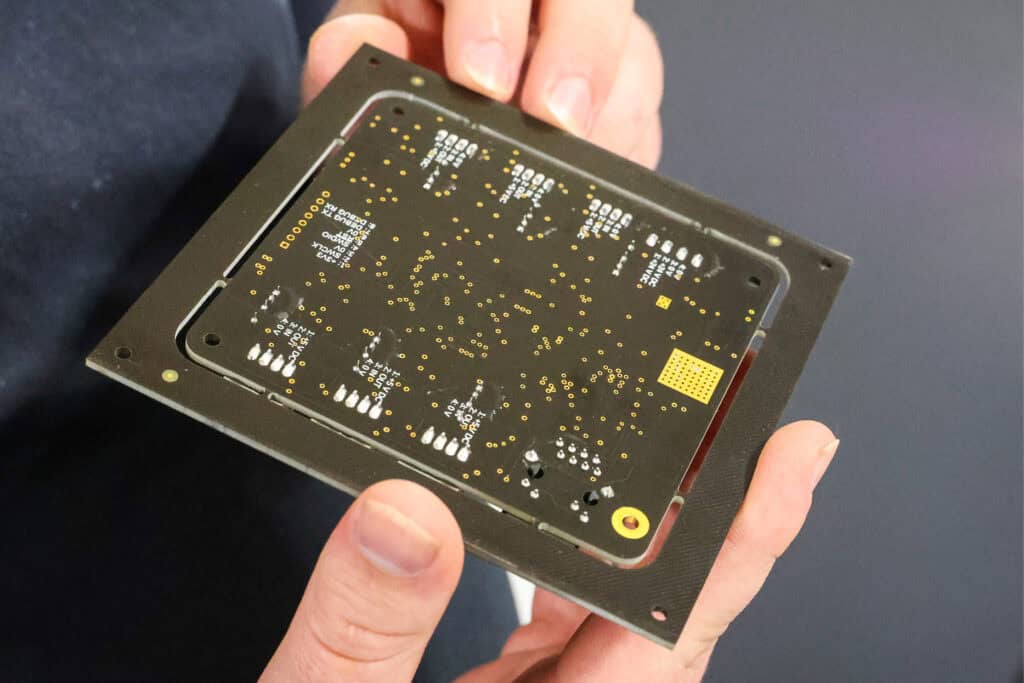
Every PCB undergoes a manual check, and additional components are added manually if required.
Reflow owen process
The reflow oven is the final soldering stage in the SMT assembly process. It melts the solder deposited during stencil printing, creating permanent electrical and mechanical connections between the electronic components and the printed circuit board.
Preheat zone
The reflow oven has four heat zones. The PCB first passes throught the preheat zone, where the temperature gradually increases. This controlled heating minimizes thermal shock to the PCB and components while activating the flux in the solder paste.
Soak zone
The board then enters the soak zone, where the temperature is maintained within a controlled range for a short period. This stage ensures:
- Even heating across the entire PCB
- Complete activation of the flux
- Temperature equalization between large and small components
- Removal of volatile compounds from the solder paste
Reflow zone
Next, the PCB enters the reflow zone, where the temperature rises above the melting point of the solder alloy. During this stage:
- The solder paste melts
- Molten solder wets the component leads and PCB pads
- Strong electrical and mechanical solder joints are formed
- Surface tension helps pull components into their correct position, known as self-alignment.
Cooling zone
The PCB enters the cooling zone, where the temperature is gradually reduced.
Controlled cooling:
- Solidifies the solder joints
- Produces a reliable solder microstructure
- Reduces thermal stress o the PCB and components
- Prevents defects such as cracking or excessive intermetallic growth
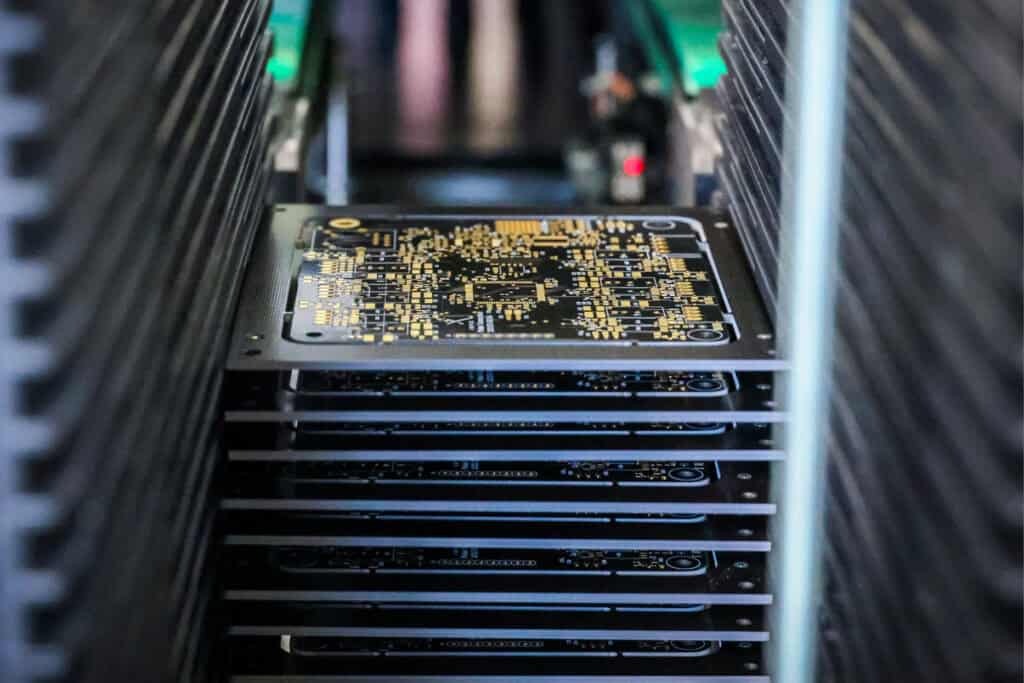
Buffer machine
The PCB exits the reflow oven with all surface-mount components permanently soldered to the board and enters the buffer machine. The buffer machine collects and stores the boards before manually placing through-hole components.
Manual through-hole component placement
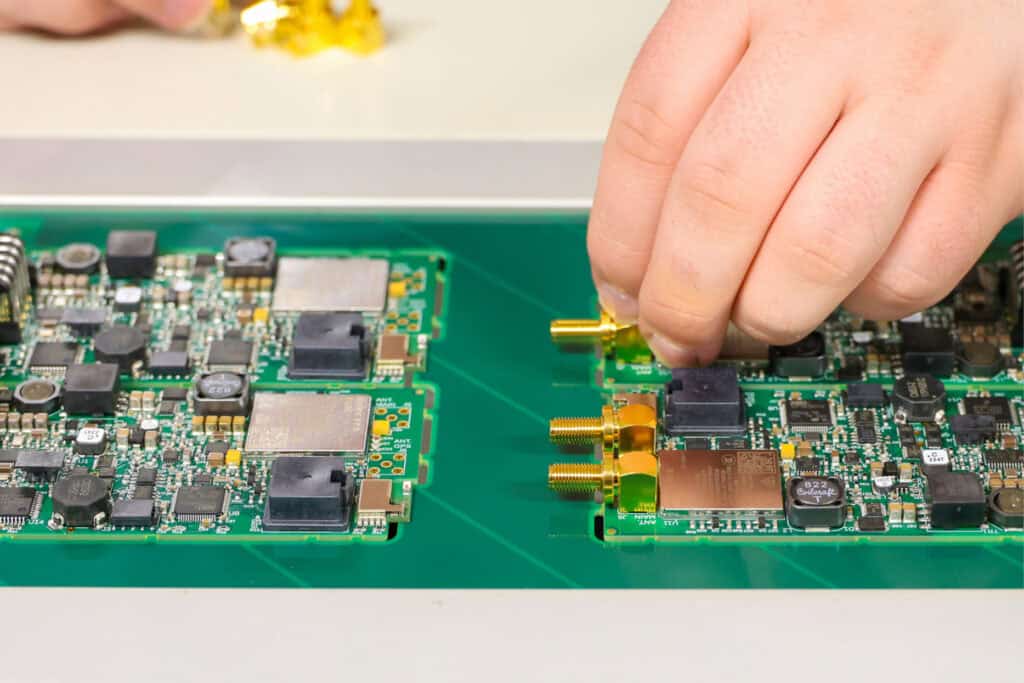
While most modern electronics use SMT, many products still require through-hole components for greater mechanical strenght, higher power handling, or easier connectivity.
The boards contain pre-drilled holes with plated barrels designed for through-hole component leads. These components are inserted manually after the SMT assembly process. Common through-hole components include:
- Connectors
- Pin headers
- Relays
- Switches
Manual insertion
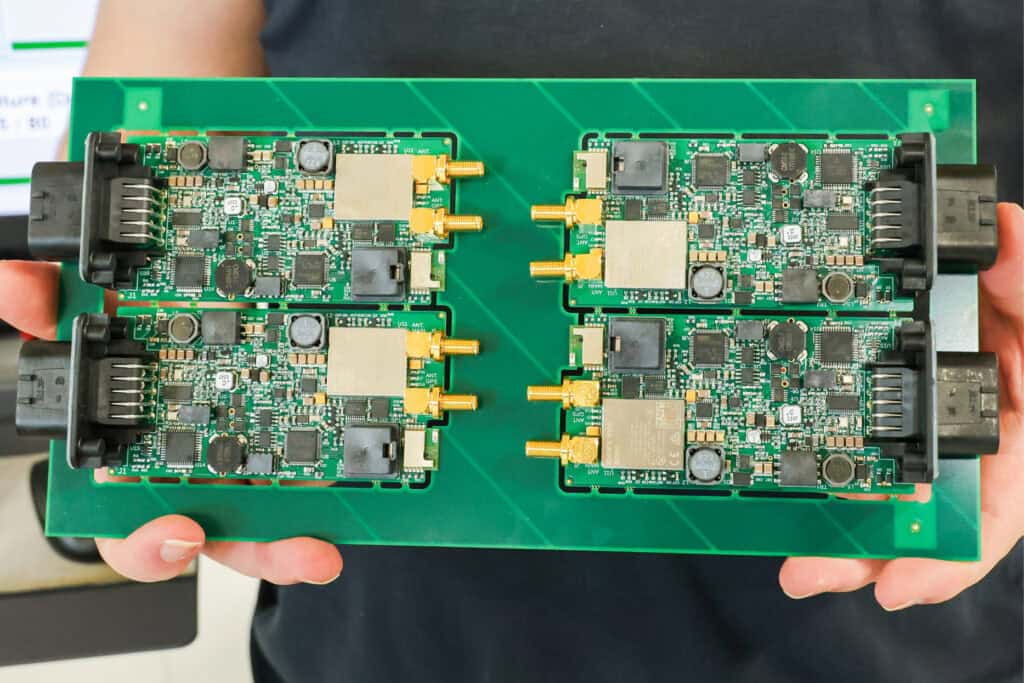
The operator inserts each component into its designated location on the PCB, guiding the leads through the corresponding holes. The operator ensures the correct component is placed in the correct position, with the proper orientation and height above the PCB. The assembled PCB is now ready for through-hole soldering.
Selective soldering machine
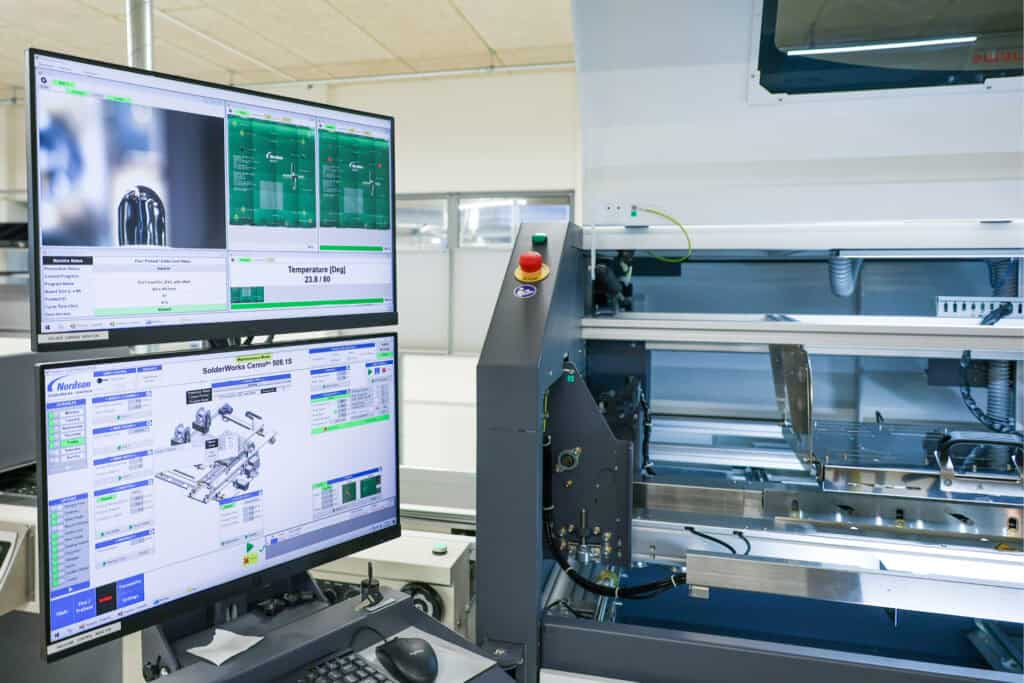
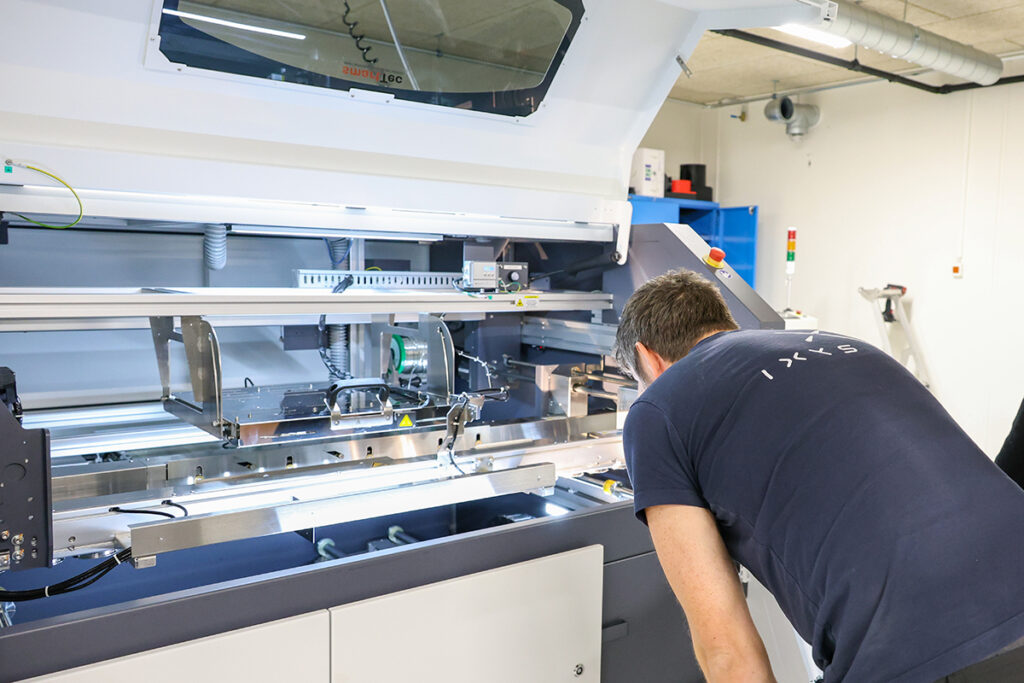
This machine solders through-hole components on a PCB after the SMT process. Unlike wave soldering, which solders all exposed joints at once, selective soldering targets individual solder joints precisely. This makes it ideal for mixed-technology assemblies where sensitive surface-mount components have already been soldered.
PCB alignment
The board is positioned and clamped to ensure accurate alignment throughout the process. The machine uses fiducial marks or programmed coordinates to locate the PCB precisely. This ensures the soldering nozzle follows the correct path and solders only the intended joints.
Flux application
A precision flux applicator deposits a controlled amount of flux onto each through-hole solder joint. The flux removes oxidation from component leads and PCB pads, promotes proper solder wetting, and improves the quality and reability of the solder joint.
Preheating
The PCB passes through a preheating stage, where the board is gradually heated. Preheating activates the flux, reduces thermal shock to the PCB and components, and ensures consistent solder flow during the soldering process.
Selective soldering
A small nozzle that continuously pumps molten solder, creating a controlled solder fountain, is moved to the programmed solder points. The machine follows a programmed path, bringing each through-hole connection into contact with the solder fountain for a precisely controlled duration. Only the selected joints are soldered, while nearby SMT components remain unaffected.
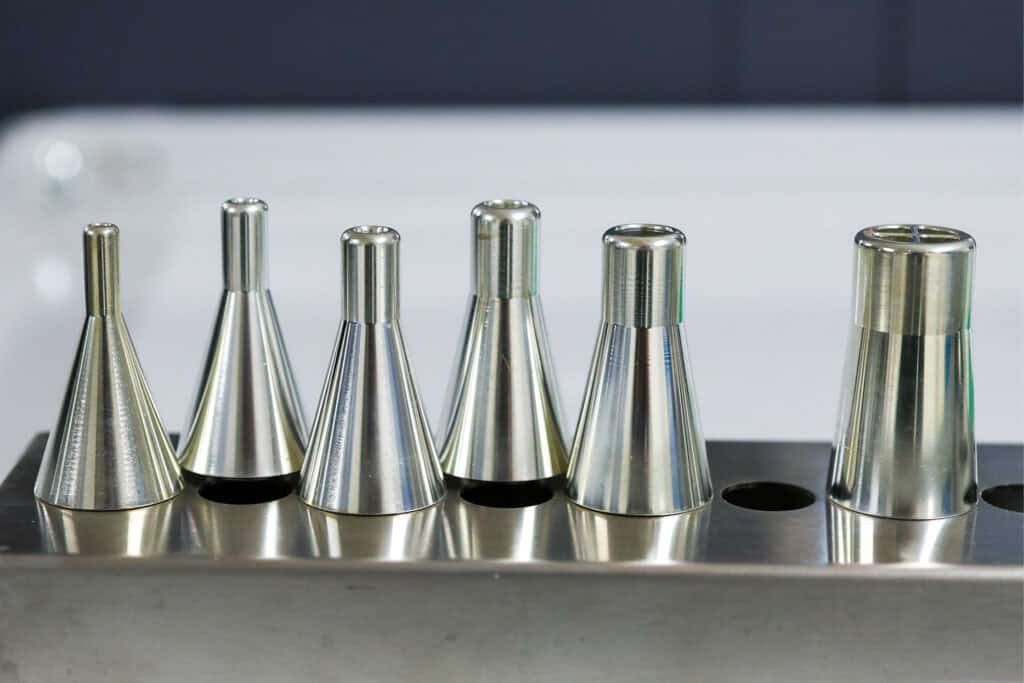
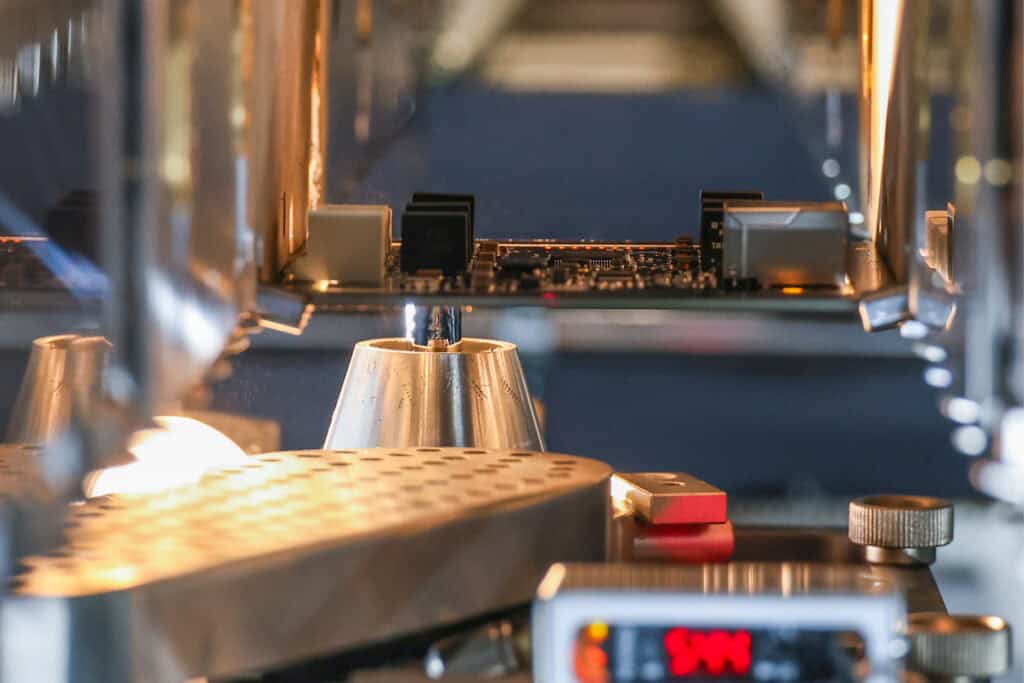
Machine parameters such as contact time, travel speed, and nozzle size are optimized for each product. The completed assembly is inspected to verify solder quality.