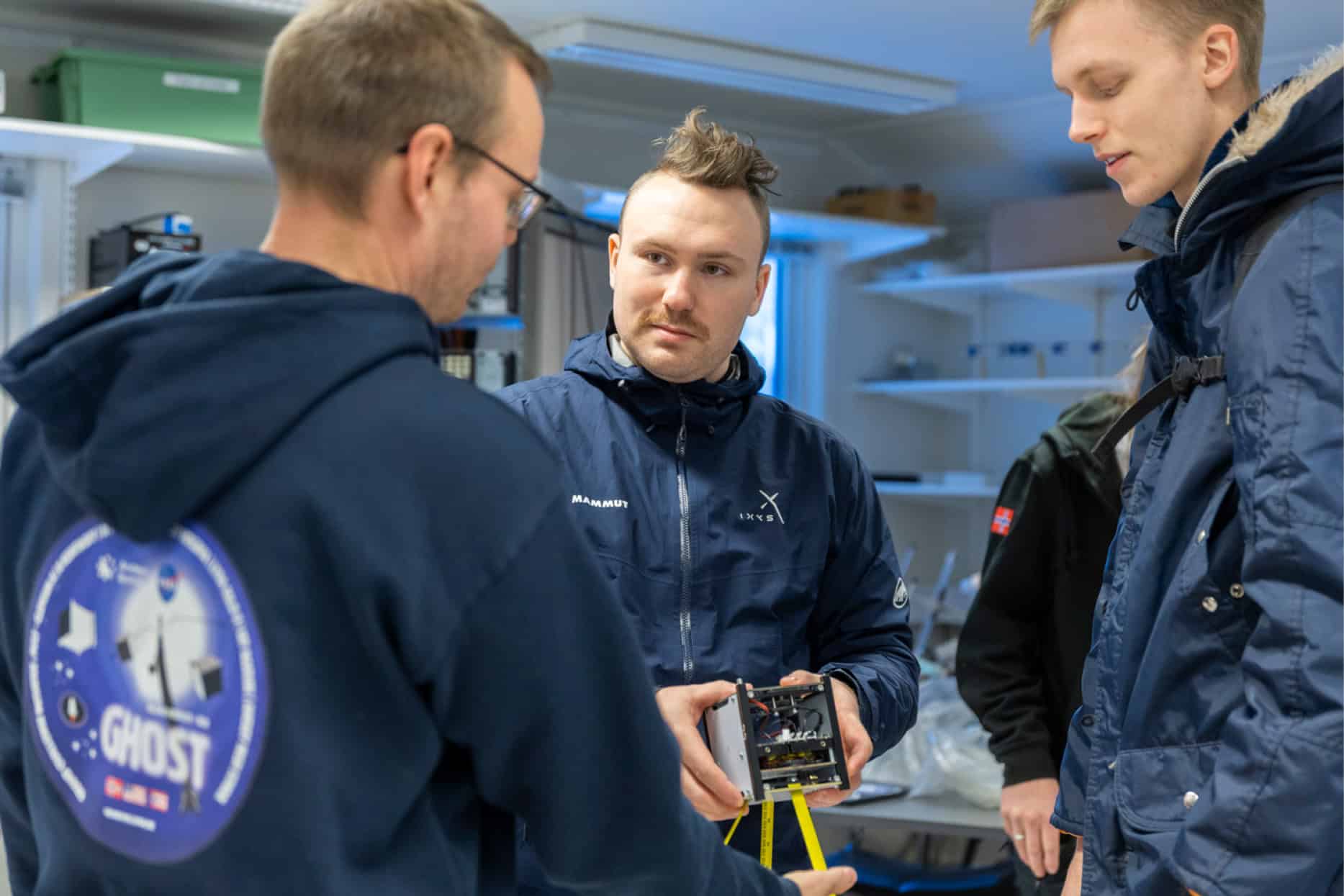
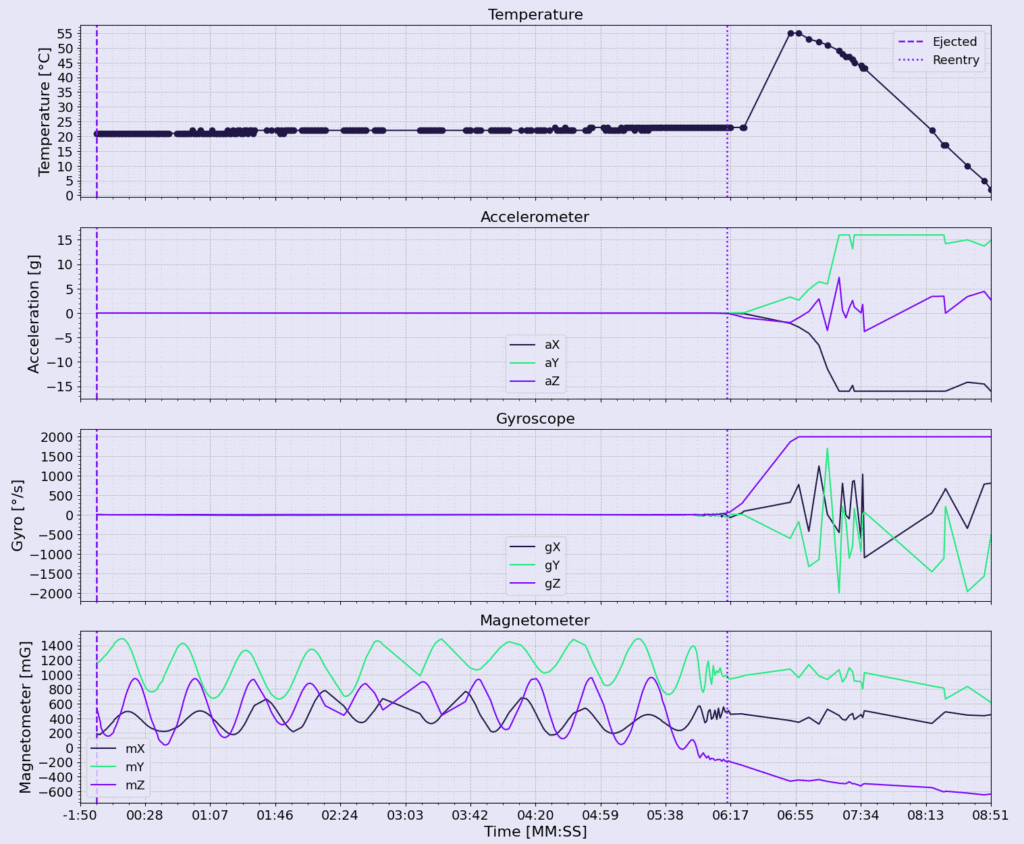
In addition to serving as platforms for the student-developed payloads, the Ixys CubeSats also transmitted their own onboard telemetry to the custom-built ground station developed by Ixys. This included accelerometer data, gyroscope readings, magnetometer measurements, and temperature.
Although Ixys normally does not work directly with launches, the project offered a valuable chance to see how the satellites perform under conditions far beyond what can be recreated in a laboratory.
Sindre Steinsvik, Hardware Engineer at Ixys has this to say about the project:
“Designing the CubeSat has been both exciting and challenging, and it’s been especially rewarding to build something that lowers the barrier for students to participate. Waiting for the ultimate test, the launch itself, has been incredibly exciting.”


Unexpectedly robust data during re-entry
During descent, it was expected that the CubeSats would burn up early in the atmosphere. They did not. One of the satellites continued transmitting telemetry longer than anticipated, giving the students a rare and highly detailed dataset.
The measurements showed temperatures around 58 °C, G-loads hitting the sensor’s maximum value of 16 G, and a rotation rate up to the measurement limit of 2000°/s. Based on how the data evolved, it is likely that the actual loads were significantly higher — estimated above 22 G and more than 5000°/s in rotation.
Despite this, the satellite transmitted telemetry until it descended so far into the atmosphere that it went out of range.
This simulation film visualizes the approximate behaviour of our CubeSats after launch, generated from real mission data collected from the CubeSats deployed in space.
Learning through collaboration
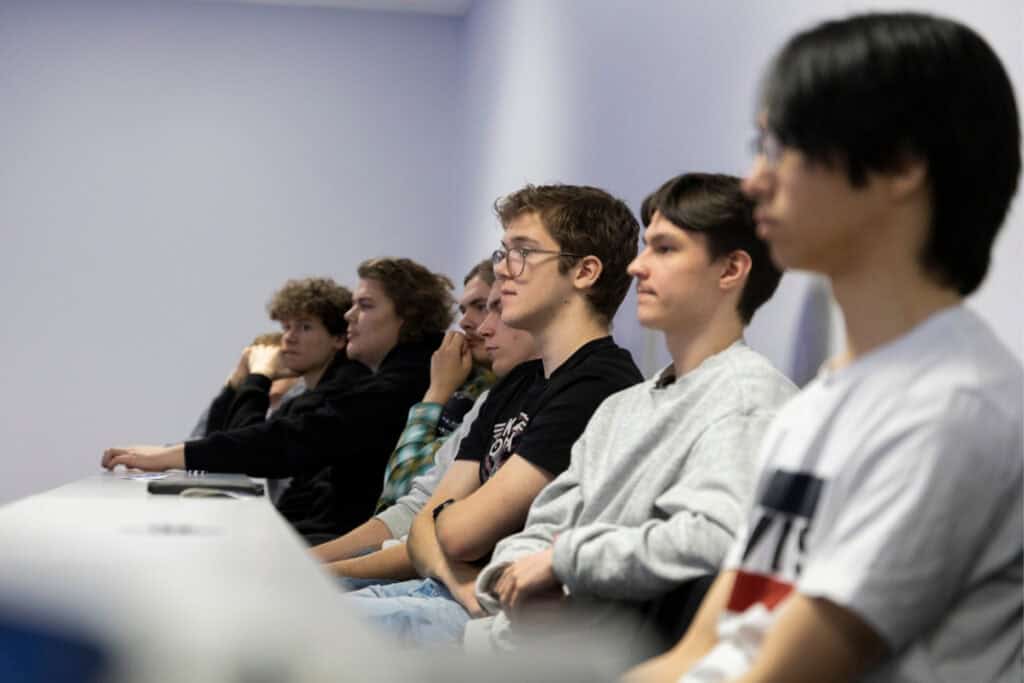
Most of the hands-on work with the CubeSats was done by the students, but Ixys was involved throughout the process. According to Sigve Haugsnes, Senior Electrical Engineer at Andøya Space, the students were generally pleased with the satellites and already see possibilities for the next version.
“The collaboration with Ixys worked well and felt very natural. They responded to questions as they came up, and they made an effort to be available for the students. Ixys were easy to work with, and they took the time to help the students understand what they were working with,” Haugsnes says.
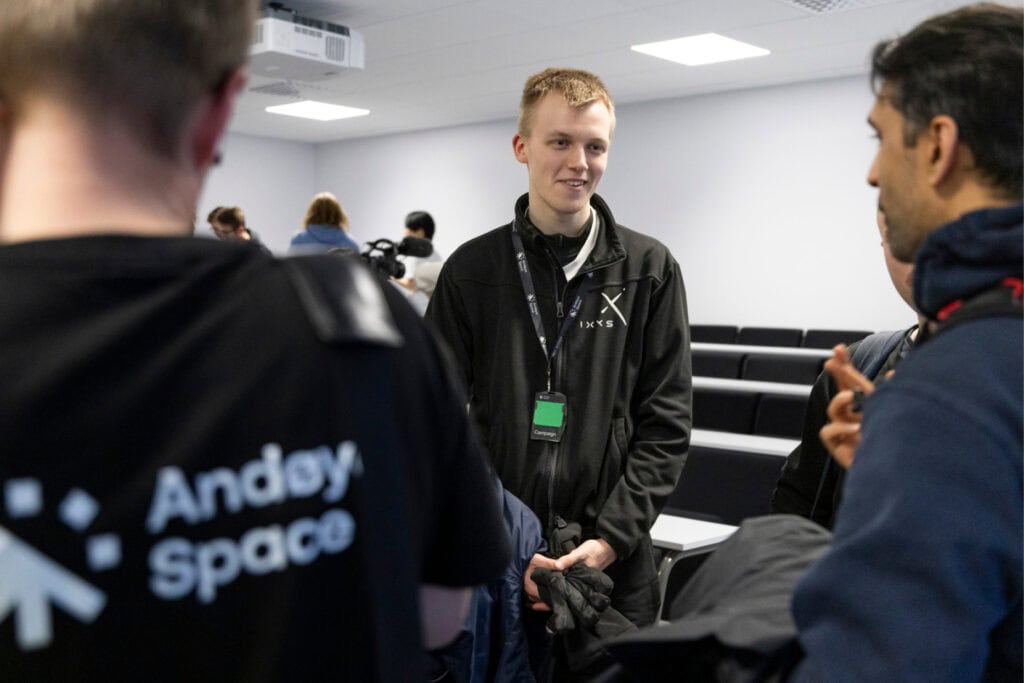
He also highlights their visit to Andøya ahead of the launch, which gave the students a chance to meet them face-to-face.
Technology under extreme conditions
The launch itself made a strong impression. Haugsnes describes how the team watched the rocket rise while data appeared on the ground station screen in real time.
“It’s always special to see a launch, but it hits differently when your own payload is on board,” according to Haugsnes.
All three Ixys CubeSats delivered data. The one assembled by the space technology students at Andøy High School stood out especially, transmitting for 11 minutes and 25 seconds — far longer than expected. When data kept arriving during re-entry, the team initially thought something was wrong with the ground equipment.
“But it wasn’t. The satellite had survived everything and kept sending data almost until it hit the ocean,” Haugsnes says.

A project that leaves an impression
For Otto Nessa Ljosdal at Ixys, the experience is as much about collaboration as technology.
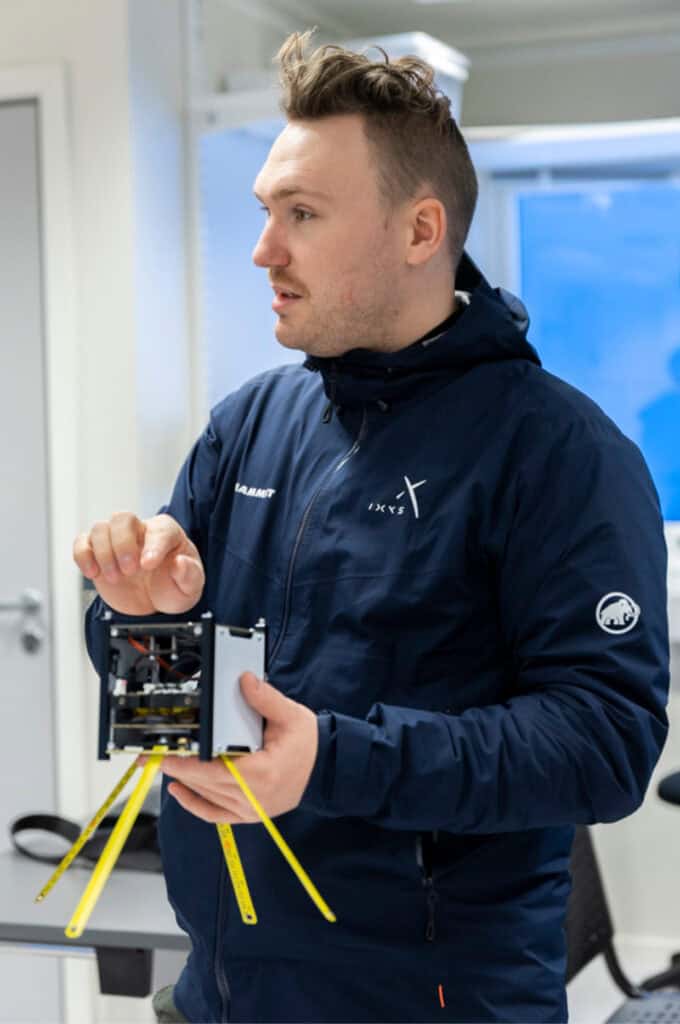
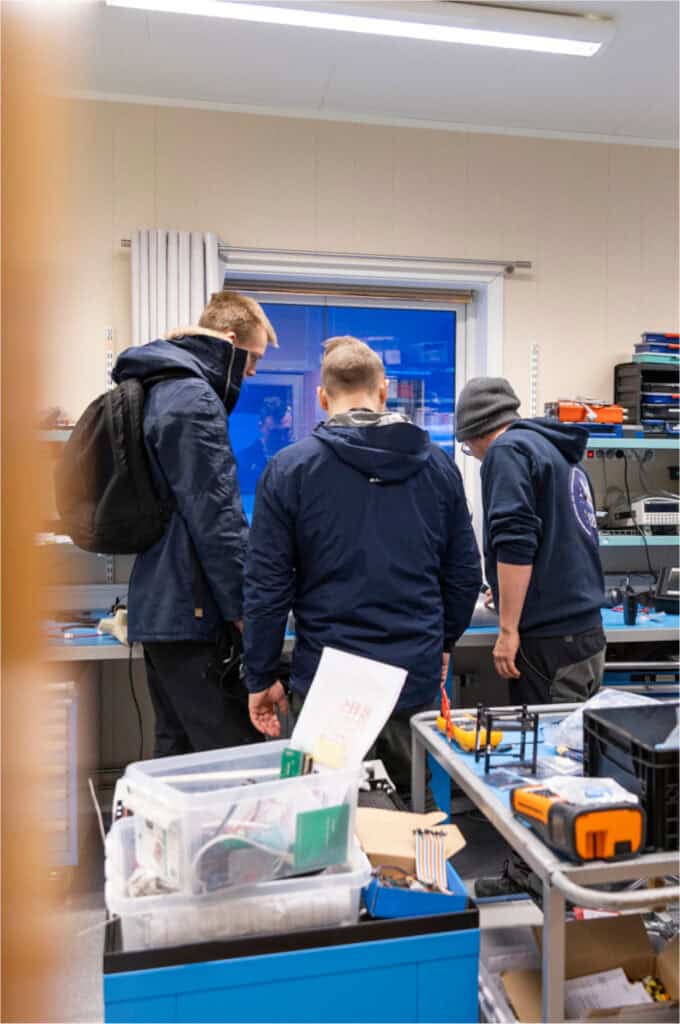
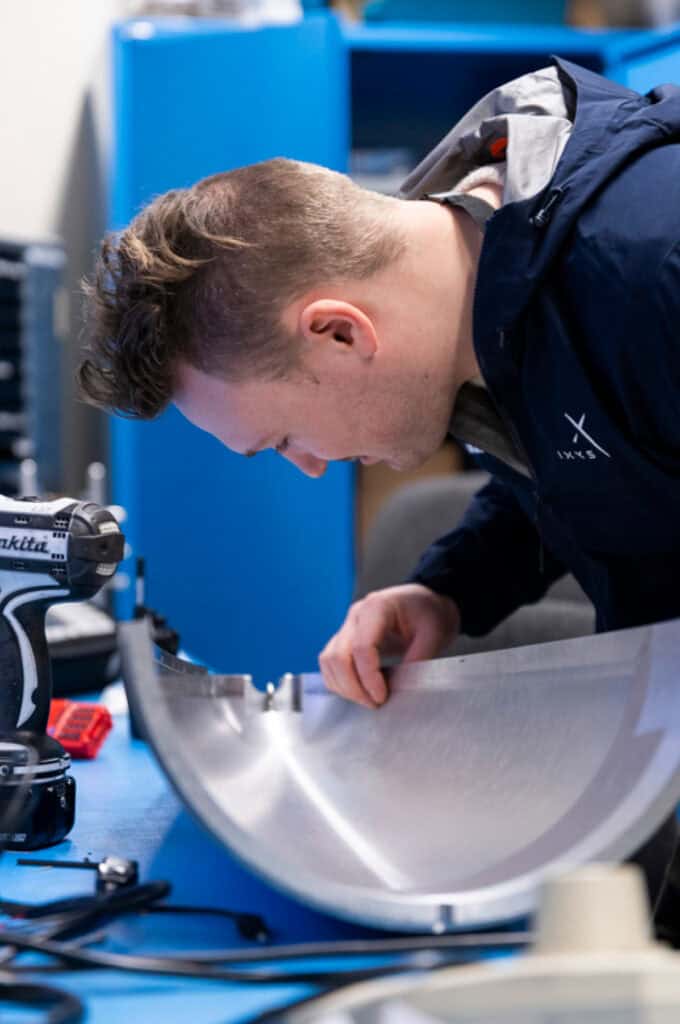
“The students have done an impressive job. It’s inspiring to see how they take ownership, ask questions, and genuinely want to understand how everything fits together. We are proud that our CubeSats were part of the project, and proud of what the students accomplished,” Otto explains.
Part of a larger mission at Andøya
Kolbjørn Blix, Vice President Sub-Orbital at Andøya Space, says GHOST fits well with Andøya’s long-term work with scientific testing and student involvement.
“The GHOST project and the cooperation with Ixys show how student projects, new technology and sounding rocket flights can be combined in a way that benefits everyone,” he says.
He emphasizes that the Ixys satellites handled the demanding flight conditions:
“The satellites developed by Ixys together with Andøya Space coped with the extreme acceleration of a sounding rocket, far higher than what they would meet in a normal satellite launch.”
Andøya Space hopes the collaboration can continue in future projects.
Read more about our CubeSats
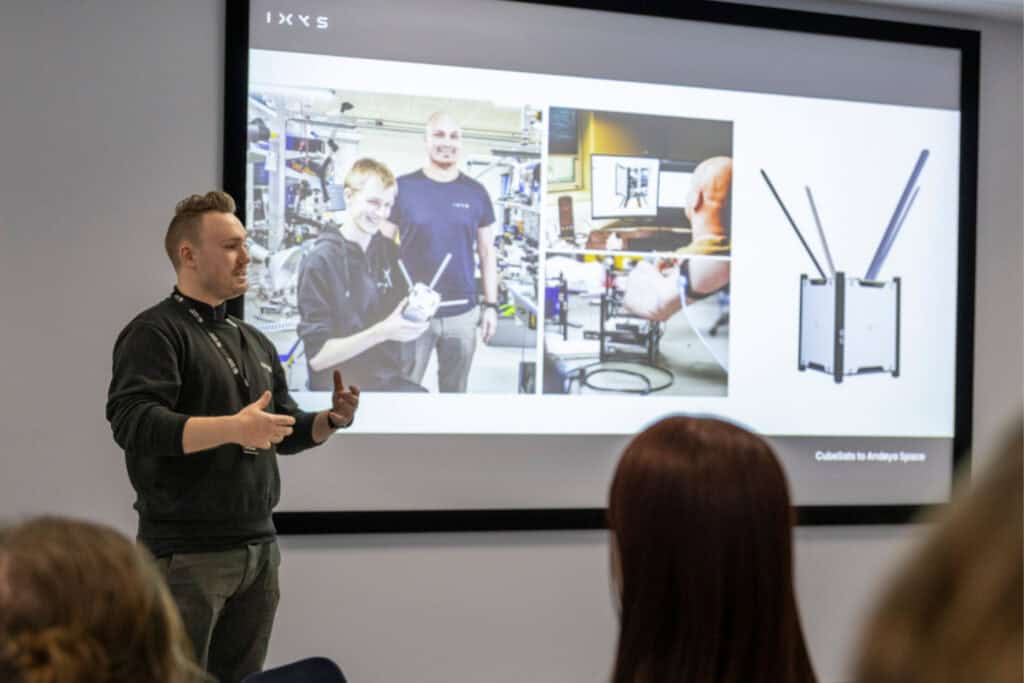
Ixys deliver CubeSats to Andøya Space